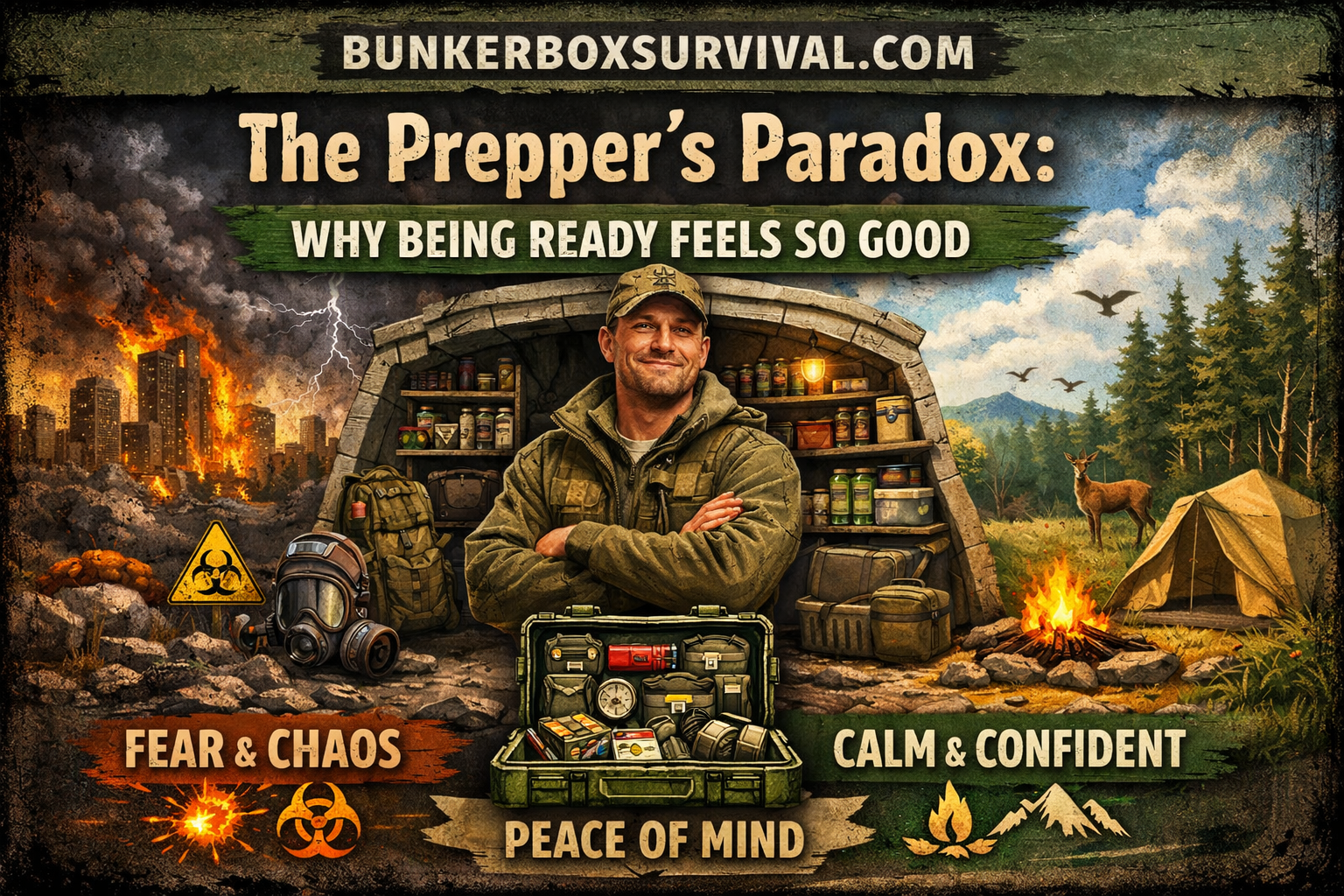
Let's talk about something most preparedness enthusiasts won't admit at dinner parties: we kind of want to use our survival gear. Not because we're hoping for disaster (we're not monsters), but because there's something deeply satisfying about knowing you could filter 300,000 liters of water if you absolutely had to.
It's like buying a fire extinguisher and being secretly disappointed your kitchen never spontaneously combusts. Except, you know, your actually grateful it doesn't.
The Best Insurance Policy You'll (Hopefully) Never Use
Here's the thing about emergency preparedness—it's the ultimate "hope for the best, plan for the worst" scenario. You spend time researching water filtration systems, comparing freeze-dried meals, and organizing your gear into color-coded categories (just me?), all while secretly hoping the most dramatic event you'll face is a brief power outage.
But that's exactly the point.
The people who laugh at preppers are the same ones who'll be knocking on your door when the power's been out for three days, the grocery stores are empty, and they've realized their "emergency plan" consists of half a bag of stale chips and vague hope.
When "Just Wing It" Isn't a Strategy
Remember the great toilet paper shortage? When people were trading rolls like currency and fistfights broke out in supermarket aisles? That wasn't even a real emergency—just supply chain hiccups and panic buying—and society nearly descended into chaos over bathroom supplies.
Now imagine an actual crisis: earthquakes, floods, extended power outages, or supply disruptions. Suddenly that survival kit tucked under your bed doesn't seem so paranoid, does it?
What Real Preparedness Looks Like
Being prepared doesn't mean you're building a bunker in your backyard and stockpiling decades of canned beans (though no judgment if you are). For most people, it means having a realistic plan for realistic scenarios:
Water: The average person needs about 3-4 liters per day. Without running water, you'll realize how much you took those 2 AM bathroom sink trips for granted. A proper water filtration system isn't just smart—it's essential.
Food: Freeze-dried meals have come a long way from the cardboard-flavored military rations of yesteryear. Modern emergency food actually tastes good, lasts for years, and doesn't require Gordon Ramsay-level cooking skills to prepare.
Power: When the grid goes down, your smartphone becomes an expensive paperweight. A reliable power source, lights, and communication devices suddenly become more valuable than your entire streaming subscription collection.
First Aid: Because "googling it" doesn't work without internet, and "walking it off" isn't a medical strategy.
Tools: A quality multi-tool is like having a hardware store in your pocket. Until you need one, you don't realize how often you actually need one.
The Peace of Mind Factor
Here's what nobody tells you about emergency preparedness: the biggest benefit isn't the gear itself—it's the anxiety you don't have.
While everyone else is panic-scrolling through news feeds during a storm warning, you're calmly checking your supplies and maybe making yourself a cup of tea (because you prepared for that too). There's a special kind of zen that comes from knowing you're ready for whatever comes.
It's like the difference between walking a tightrope with a safety net versus without one. Sure, you might never fall, but knowing the net is there makes the whole experience considerably less terrifying.
Start Small, Think Smart
You don't need to transform into a full-blown survivalist overnight (though that's a valid life choice). Start with the basics:
- 72-hour kit: Enough supplies to get you through three days without outside help
- Water solution: Because hydration is non-negotiable
- Emergency food: That actually tastes like food
- Light source: Candles are romantic until they're your only option
- First aid supplies: For when "Alexa, call 911" isn't an option
Think of it as adulting, but make it survival skills.
The Bottom Line
Being prepared isn't about living in fear—it's about living with confidence. It's about being the person others can count on when things go sideways. It's about not having to fight someone over the last loaf of bread because you've already got the situation handled.
Plus, there's something undeniably badass about being ready for anything. Sure, you might look like a regular person going about your regular life, but you've got a secret: you're basically a low-key superhero with better organizational skills.
So go ahead, build that emergency kit. Stock those supplies. Organize that gear. And then go live your life with the quiet confidence of someone who knows that no matter what happens, you've got this.
Because the best time to prepare for an emergency is before it becomes an emergency. The second best time is right now.
Ready to stop worrying and start preparing? Check out our curated survival kits designed for real people facing real situations. Because peace of mind shouldn't require a PhD in survival studies.
